

Why Corporate Training is Essential for Business Success
- Burraq Consulting
- Training
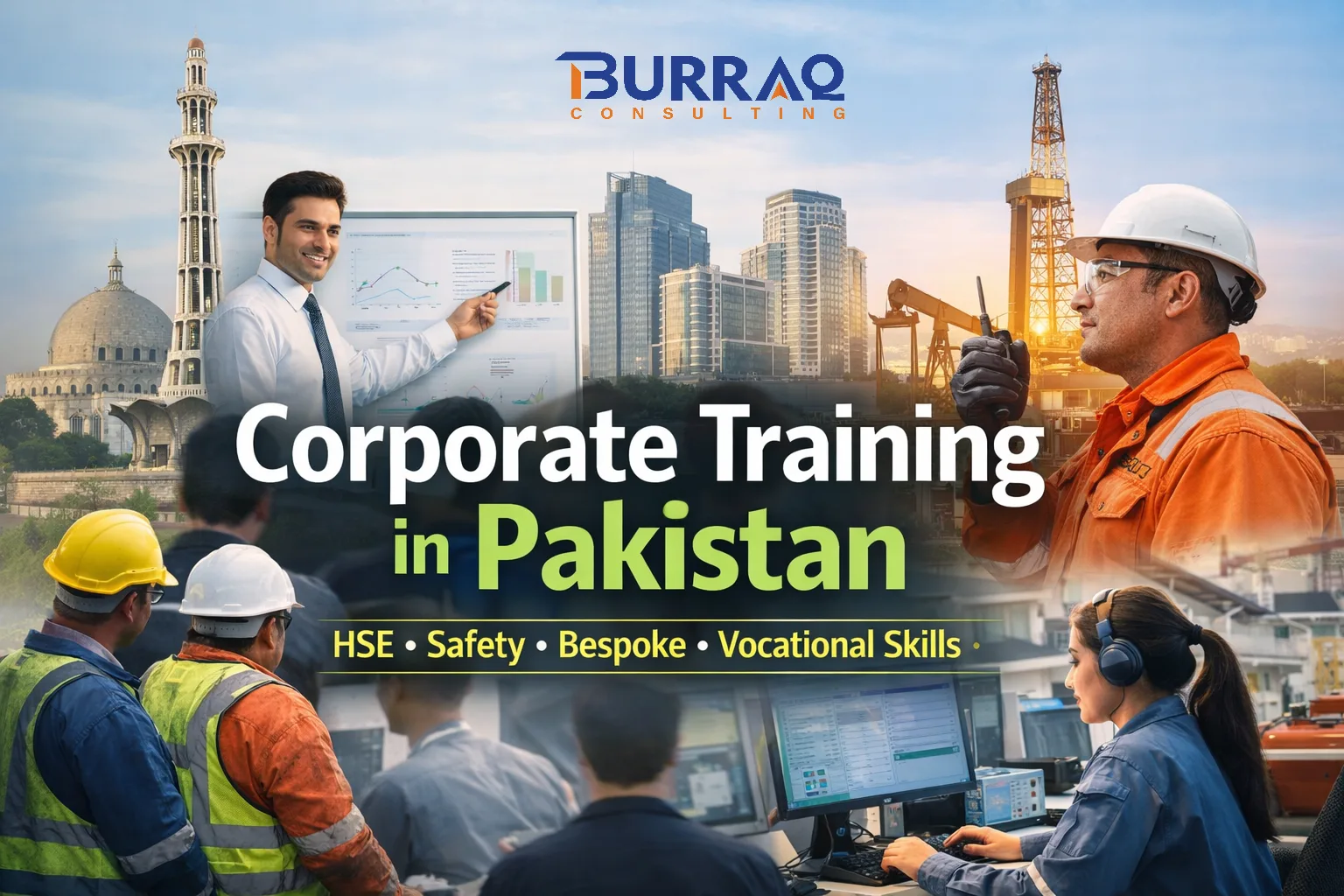
The Changing Face of Business in Pakistan
Corporate training and employee development have become strategic business imperatives for organizations that wish to succeed and grow in a sustainable manner. As the global business environment changes at a rapid pace with the advancement of technology, digitalization, and the changing expectations of employees in the Pakistani corporate world, organizations in various sectors like manufacturing, services, IT, banking, energy, and others have come to realize that training is no longer a luxury but a business imperative.
Pakistan’s economy is undergoing structural shifts, driven by digitalization, demographic growth, and integration with international value chains. However, many industries still face skill gaps, productivity challenges, and high employee turnover, which can hinder growth if left unaddressed. Studies show that low labor productivity compared to regional peers is linked to limited professional development and workforce upskilling.
This is where corporate training programs play a pivotal role—equipping employees with updated competencies, leadership capabilities, and practical skills that directly impact operational efficiency and strategic performance.
What Is Corporate Training?
Corporate training refers to structured learning initiatives designed to strengthen employee skills, knowledge, and competencies in alignment with business goals. Unlike one-time workshops, effective training is ongoing, targeted, and tailored to the industry’s needs—whether that’s technical expertise, leadership development, digital know-how, compliance, or soft skills like communication and collaboration.
Key Benefits of Corporate Training for Pakistani Businesses
1. Boosted Employee Performance & Productivity
Employees trained in relevant skills perform tasks more accurately and efficiently. Organisations that invest in systematic skill development see measurable productivity gains, improved workflows, and faster operational execution—especially in sectors like manufacturing, telecom, and finance where technical precision matters.
2. Enhanced Innovation and Adaptability
A structured learning culture promotes innovation by exposing employees to new methodologies, technologies, and strategic thinking. Companies that foster continuous professional growth are better equipped to adapt to market shifts, adopt new digital solutions, and remain agile.
3. Stronger Leadership and Management Capability
Leadership training builds future-ready managers who can drive teams, make data-informed decisions, and champion organisational goals. This leadership pipeline reduces reliance on external hires and ensures continuity in business strategy.
4. Reduced Employee Turnover and Increased Satisfaction
When companies invest in development, employees feel valued and are more likely to stay long-term. Improved retention not only reduces recruitment costs but also preserves institutional knowledge—critical for industries facing talent shortages.
5. Greater Competitiveness and Market Positioning
Organisations that prioritise employee learning often outperform competitors. They deliver higher quality products and services, respond more effectively to customer needs, and attract top talent—strengthening their position both locally and globally.
6. Compliance, Safety, and Risk Mitigation
In regulated sectors like finance, health, and energy, training ensures compliance with industry standards and safety norms. This reduces risk, prevents costly errors, and protects organisational reputation.
How to Implement Effective Training
For corporate training to deliver real value, it must be tailored, measurable, and aligned with organisational goals. The following best practices help ensure maximum impact:
✔ Customise Programs to Industry Needs
Identifying specific skill gaps and training needs within your sector helps create more effective learning pathways—for example, technical training for manufacturing staff or digital skills upskilling for IT and services teams.
✔ Leverage Technology and Digital Platforms
E-learning, virtual workshops, and blended training solutions make development accessible to employees across remote or distributed teams, reducing operational disruptions.
✔ Focus on Practical, Applied Skills
Hands-on training and case-based learning ensures employees can apply new knowledge directly to their work—boosting both confidence and competence.
✔ Cultivate a Culture of Continuous Learning
Training shouldn’t be a one-off event. Establish ongoing development pathways, mentorship programs, and career progression frameworks to nurture lifelong learning.
✔ Measure Training Outcomes
Establish clear performance indicators to assess improvements in productivity, quality, leadership effectiveness, and employee engagement post-training.
Why Burraq Consulting Is the Right Partner for Corporate Training in Pakistan
Burraq Consulting provides comprehensive solutions in corporate training in Pakistan, focusing on practical implementation and measurable outcomes. Our expertise spans HSE training in Pakistan, safety training in Pakistan, bespoke training in Pakistan, and vocational training in Pakistan across multiple industries.
We work closely with management teams to understand operational challenges before designing training interventions. Our approach is performance-driven, compliance-focused, and aligned with international standards.
We do not deliver generic lectures. We deliver transformation that strengthens businesses from within.
At Burraq Consulting, we understand the unique challenges and opportunities within Pakistan’s industries. We design bespoke training and development solutions that:
Align with your organisational strategy and business objectives
Address real skill gaps specific to your sector
Boost employee performance and operational excellence
Support long-term talent retention and leadership development
Our expert consultants work closely with HR teams and business leaders to ensure training investments deliver measurable ROI and sustainable performance improvements.
Conclusion
Corporate training is more than a learning initiative—it’s a strategic investment in your organisation’s future. In Pakistan’s competitive and rapidly transforming economic environment, companies that prioritise workforce development gain clear advantages in productivity, innovation, and market leadership.
For Pakistani businesses seeking to unlock growth and build a resilient, future-ready workforce, investing in corporate training isn’t optional—it’s essential.