

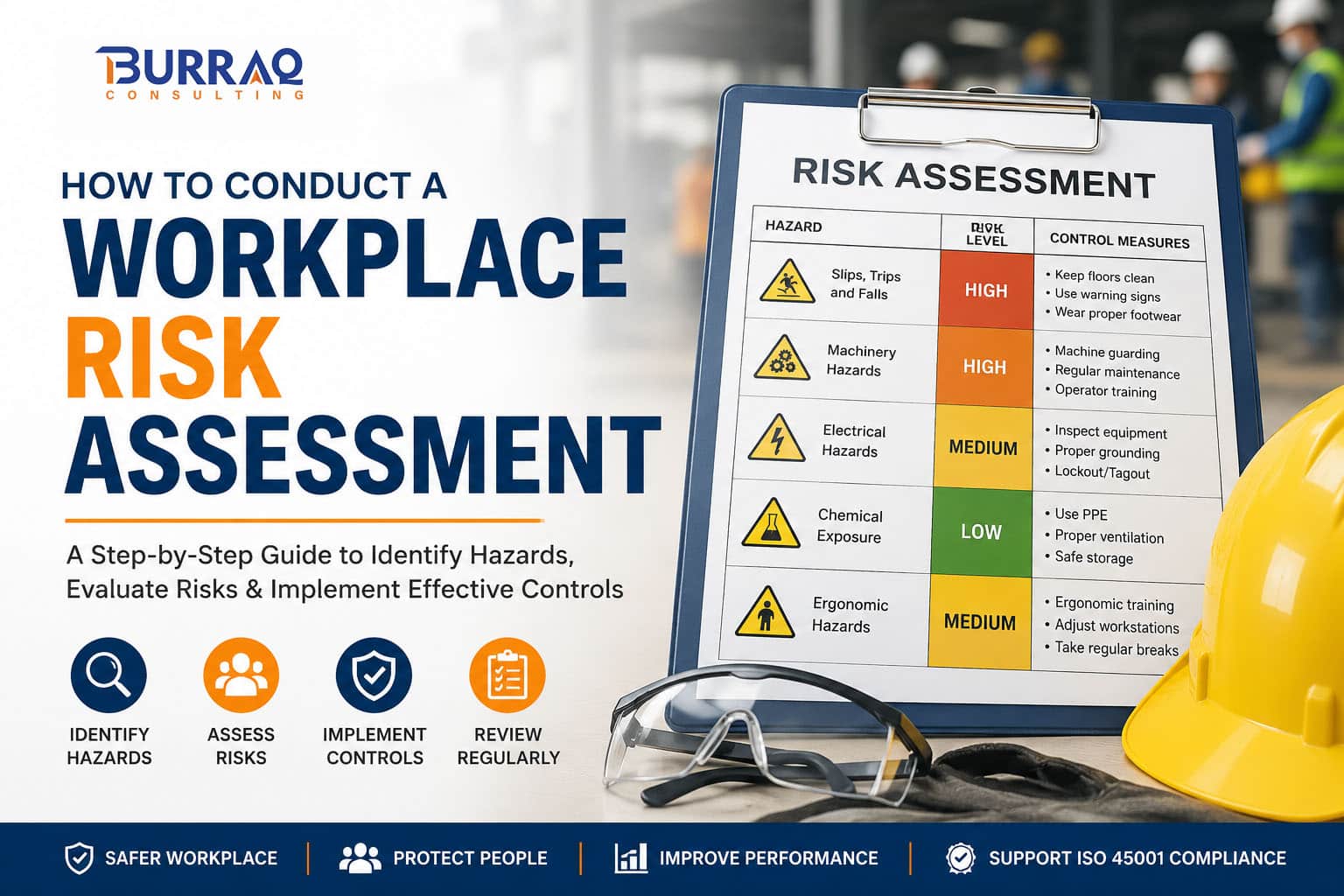
How to Conduct a Workplace Risk Assessment? A Guide to the Safer Workplace
Workplace safety is not achieved by chance. It comes from identifying hazards before they become incidents, understanding the level of risk they present, and taking practical steps to control them. Whether you manage a small office, a manufacturing facility, a construction site, or a warehouse, conducting a workplace risk assessment is one of the most effective ways to protect your employees, comply with legal requirements, and improve business performance.
Unfortunately, many organizations treat risk assessments as paperwork that sits in a file until the next audit. An effective risk assessment is much more than a compliance requirement—it is a proactive process that helps businesses prevent injuries, reduce downtime, and create a safer working environment.
In this guide, you’ll learn exactly how to conduct a workplace risk assessment, why it matters, and the best practices that successful organizations follow.
What Is a Workplace Risk Assessment?
A workplace risk assessment is a systematic process used to identify hazards, evaluate the likelihood and severity of harm, and implement appropriate control measures to reduce risks to an acceptable level. The purpose is simple:
- Identify anything that could cause harm.
- Determine who could be affected.
- Evaluate the level of risk.
Introduce effective control measures. - Review and update the assessment regularly.
Risk assessments form the foundation of every effective Occupational Health and Safety Management System (OHSMS), including organizations implementing ISO 45001.
Why Is Workplace Risk Assessment Important?
Every workplace contains hazards. Some are obvious, while others remain unnoticed until an accident occurs. A well-executed risk assessment helps organizations:
- Prevent workplace injuries and illnesses
- Reduce accidents and near misses
- Improve employee confidence and morale
- Meet legal and regulatory requirements
- Lower insurance and compensation costs
- Improve operational efficiency
- Strengthen organizational safety culture
- Support ISO 45001 certification requirements
Instead of reacting after an incident occurs, businesses can eliminate hazards before they lead to costly consequences.
Steps to Conduct Risk Assessment
Step 1: Identify Workplace Hazards
The first step is identifying everything that could potentially cause injury, illness, environmental damage, or property loss. Common workplace hazards include:
Physical Hazards
- Slippery floors
- Working at heights
- Moving machinery
- Falling objects
- Poor housekeeping
- Excessive noise
- Vibration
Biological Hazards
- Bacteria
- Viruses
- Mold
- Bloodborne pathogens
- Animal waste
Ergonomic Hazards
- Poor workstation design
- Repetitive tasks
- Manual handling
- Awkward lifting
- Prolonged sitting
Electrical Hazards
- Exposed wiring
- Faulty equipment
- Overloaded circuits
- Improper grounding
Fire Hazards
- Flammable liquids
- Faulty electrical systems
- Poor storage practices
- Blocked emergency exits
Psychosocial Hazards
- Workplace stress
- Fatigue
- Harassment
- Violence
- Excessive workload
Ways to Identify Hazards
Experienced safety professionals use multiple techniques, including:
- Workplace inspections
- Employee interviews
- Incident reports
- Near-miss investigations
- Equipment manuals
- Safety audits
- Job Safety Analysis (JSA)
- Hazard Identification (HAZID)
- Manufacturer safety data sheets (SDS)
The more comprehensive your hazard identification process, the more effective your risk assessment will be.
Step 2: Determine Who Could Be Harmed
Not every hazard affects everyone equally. Consider all individuals who may be exposed, including:
- Employees
- Contractors
- Visitors
- Maintenance personnel
- Temporary workers
- Delivery drivers
- Customers
- Interns
- Pregnant employees
- Workers with disabilities
Also consider how they could be harmed. For example:
| Hazard | Who Could Be Harmed | Possible Harm |
|---|---|---|
| Wet floor | Employees and visitors | Slips and fractures |
| Welding fumes | Welders | Respiratory illness |
| Forklift traffic | Warehouse workers | Collision injuries |
| Chemical spill | Maintenance staff | Burns and poisoning |
Step 3: Evaluate the Risks
Once hazards have been identified, determine how serious each one is.
Risk is generally calculated by considering:
Risk = Likelihood × Severity
Likelihood
Ask questions such as:
How often is the task performed?
How many people are exposed?
Has an incident occurred before?
How reliable are existing controls?
Likelihood may be rated as:
- Rare
- Unlikely
- Possible
- Likely
- Almost Certain
Severity
Consider the potential consequences. Examples include:
- Minor injury
- Medical treatment
- Lost-time injury
- Permanent disability
- Fatality
Organizations often use a risk matrix to prioritize which hazards require immediate action. High-risk hazards should always receive priority.
Step 4: Implement Control Measures
Once risks have been evaluated, introduce measures to eliminate or reduce them. The most effective method is following the Hierarchy of Controls.
1. Elimination
Completely remove the hazard.
Example: Remove unnecessary hazardous chemicals from the workplace.
2. Substitution
Replace the hazard with a safer alternative.
Example: Use water-based paint instead of solvent-based paint.
3. Engineering Controls
Physically isolate workers from hazards.
Examples include: Machine guards, Ventilation systems, Safety barriers, Noise enclosures
4. Administrative Controls
Improve procedures and management practices.
Examples include: Safe work procedures, Employee training, Warning signs, Shift rotation, Permit-to-work systems
5. Personal Protective Equipment (PPE)
PPE should always be the last line of defense.
Examples include: Safety helmets
Gloves, Safety shoes, Respirators, Hearing protection, Eye protection
Step 5: Record Your Findings
Documenting your assessment ensures consistency and demonstrates due diligence.
Your risk assessment should include:
- Identified hazards
- People at risk
- Existing controls
- Risk rating
- Recommended actions
- Responsible persons
- Completion dates
- Review date
Good documentation also supports legal compliance, audits, and continuous improvement initiatives.
Step 6: Communicate the Findings
A risk assessment has little value if employees are unaware of its findings. Share the results through:
- Safety meetings
- Toolbox talks
- Training sessions
- Notice boards
- Digital safety management systems
Employees should understand:
- Identified hazards
- Required safety precautions
- Emergency procedures
- Reporting methods
Clear communication encourages greater participation in workplace safety.
Step 7: Review and Update the Assessment
Risk assessments should never remain static. Review them whenever:
- New equipment is introduced
- Processes change
- New chemicals are used
- An accident occurs
- A near miss is reported
- Workplace layout changes
- New legislation is introduced
Even without major changes, conducting an annual review is considered good practice.
Common Mistakes During Workplace Risk Assessments
Many organizations reduce the effectiveness of their assessments by making avoidable mistakes. Some of the most common include:
- Copying generic templates without evaluating actual workplace conditions
- Ignoring employee feedback
- Assessing only obvious hazards
- Failing to review assessments regularly
- Not assigning responsibility for corrective actions
- Treating the assessment as a one-time exercise
- Overlooking contractors and visitors
- Depending solely on PPE instead of eliminating hazards
Avoiding these mistakes leads to stronger safety performance and better long-term outcomes.
Best Practices for Effective Risk Assessments
Organizations with mature safety programs typically follow these practices:
- Involve employees throughout the assessment process.
- Conduct regular workplace inspections.
- Use standardized risk assessment templates.
- Prioritize high-risk activities.
- Track corrective actions until they are completed.
- Monitor the effectiveness of implemented controls.
- Integrate findings into safety training programs.
- Maintain accurate records for audits and compliance.
Risk assessments become far more valuable when they are integrated into day-to-day operations rather than completed only during inspections or certification audits.
How ISO 45001 Supports Workplace Risk Assessment
ISO 45001 places risk-based thinking at the center of occupational health and safety management. Organizations implementing ISO 45001 are expected to:
- Identify workplace hazards systematically
- Assess occupational health and safety risks
- Determine opportunities for improvement
- Implement appropriate controls
- Monitor performance
- Continually improve the management system
A structured risk assessment process not only supports compliance with ISO 45001 but also strengthens overall business resilience by reducing operational disruptions caused by workplace incidents.
Conclusion
A workplace risk assessment is far more than a regulatory requirement—it is a practical tool for protecting people, improving operational performance, and supporting sustainable business growth. By identifying hazards, evaluating risks, implementing appropriate controls, and reviewing the process regularly, organizations can significantly reduce the likelihood of workplace incidents while building a culture where safety is part of everyday decision-making.
Whether your business operates in manufacturing, construction, healthcare, logistics, education, or an office environment, a structured risk assessment process helps create safer workplaces and demonstrates a genuine commitment to employee well-being.
How Burraq Consulting Can Help?
At Burraq Consulting, we help organizations build safer workplaces through professional health and safety consultancy, workplace risk assessments, and internationally recognized training programs. Our experienced consultants work with businesses across various industries to identify hazards, evaluate risks, implement practical control measures, and strengthen compliance with occupational health and safety requirements, including ISO 45001.
Whether you need assistance with a single workplace assessment or a complete safety management system, our team provides practical guidance tailored to your organization’s operations.
Contact Burraq Consulting today to learn how we can help you improve workplace safety, reduce operational risks, and achieve long-term compliance.
Frequently Asked Questions (FAQs)
The primary purpose is to identify workplace hazards, evaluate the risks they present, and implement effective control measures to prevent injuries, illnesses, and property damage.
Risk assessments should be reviewed whenever significant workplace changes occur, after an incident or near miss, or at least annually to ensure they remain accurate and effective.
Employers are responsible for ensuring risk assessments are completed, but supervisors, safety professionals, and employees should all contribute to identifying hazards and evaluating risks.
Nearly every industry benefits from workplace risk assessments, including construction, manufacturing, healthcare, oil and gas, logistics, education, hospitality, retail, and office environments.
Yes. Risk assessment is a fundamental requirement of ISO 45001, helping organizations identify occupational health and safety risks and implement appropriate controls as part of their management system.