

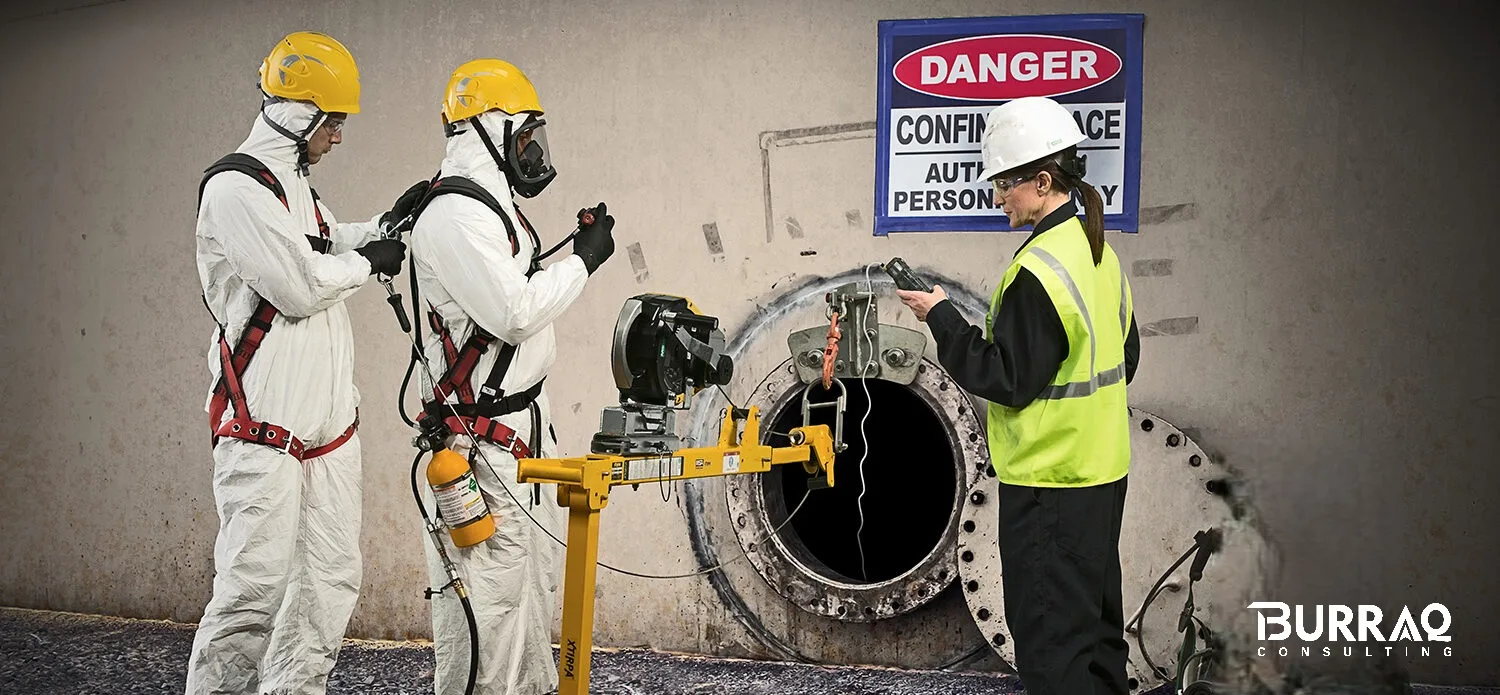
Hidden Dangers of Confined Spaces: What Workers Must Know
Confined spaces are common in many industries across Pakistan the world, including construction, oil & gas, power plants, manufacturing facilities, and wastewater treatment plants. These areas may appear harmless, but they often contain serious hazards that can lead to severe injuries or even fatalities if proper precautions are not taken.
Every year, workplace incidents occur because workers underestimate the risks associated with confined spaces. Understanding these dangers and implementing proper safety procedures is essential for protecting employees and maintaining safe operations.
At Burraq Consulting, we emphasize the importance of confined space awareness and safety training for organizations across Pakistan. By educating workers and supervisors about potential hazards, businesses can significantly reduce accidents and ensure compliance with occupational safety standards.
What Is a Confined Space?
A confined space is an enclosed or partially enclosed area that is not designed for continuous human occupancy and has limited entry or exit points. These spaces can pose serious risks due to poor ventilation, hazardous atmospheres, and restricted movement.
Common examples of confined spaces include:
- Storage tanks
- Silos and hoppers
- Manholes and sewer systems
- Underground vaults
- Pipelines and ducts
- Boilers and pressure vessels
Although workers may need to enter these areas for inspection, cleaning, maintenance, or repairs, the environment inside them can quickly become dangerous without proper preparation.
Why Confined Spaces Are Dangerous
Confined spaces are particularly hazardous because several risks can develop simultaneously. Limited airflow, restricted movement, and the accumulation of hazardous substances can create life-threatening conditions in minutes.
Many workers assume that a confined space is safe simply because it appears empty or unused. However, invisible hazards such as toxic gases or oxygen deficiency can be present even when no obvious warning signs exist.
Understanding these risks is the first step toward preventing workplace accidents.
Major Hidden Dangers of Confined Spaces
For corporate training to deliver real value, it must be tailored, measurable, and aligned with organisational goals. The following best practices help ensure maximum impact:
1. Oxygen Deficiency
One of the most serious hazards in confined spaces is the lack of sufficient oxygen. Normal air contains around 20.9% oxygen, and levels below 19.5% can quickly become dangerous for humans.
Oxygen levels can decrease due to:
- Rusting metals
- Chemical reactions
- Combustion processes
- Displacement by other gases
When oxygen levels drop, workers may experience symptoms such as dizziness, confusion, rapid breathing, and eventually unconsciousness.
In many confined space incidents, victims collapse without warning because they cannot detect the drop in oxygen levels.
2. Toxic Gases and Vapors
Confined spaces often allow hazardous gases to accumulate. Without proper ventilation, these gases can reach dangerous concentrations. Common toxic gases found in confined spaces include:
- Hydrogen sulfide (H₂S)
- Carbon monoxide (CO)
- Methane
- Chemical vapors from industrial processes
Even small amounts of these gases can cause severe health problems such as respiratory distress, poisoning, or loss of consciousness. This is why gas monitoring equipment and atmospheric testing are critical before entering confined spaces.
3. Fire and Explosion Hazards
Some confined spaces may contain flammable gases or vapors. When these substances mix with oxygen and an ignition source is present, they can trigger fires or explosions. Industries that frequently face this risk include:
- Oil and gas operations
- Chemical plants
- Fuel storage facilities
- Manufacturing units
Even activities such as welding or using electrical tools can ignite flammable gases if proper precautions are not taken.
4. Limited Entry and Exit
One of the defining characteristics of confined spaces is restricted access. This makes evacuation and rescue operations extremely difficult during emergencies.
Workers may have only one small entry point, such as a manhole or narrow hatch. If a person collapses inside the space, rescuers may struggle to reach them quickly.
Unfortunately, many fatalities occur when untrained coworkers attempt rescue without proper equipment, exposing themselves to the same hazards.
5. Engulfment Hazards
In some confined spaces, workers face the risk of being engulfed by materials such as: Grain, Sand, Sludge, Water, Chemical substances.
These materials can trap workers and restrict breathing, leading to suffocation within minutes. Industries like agriculture, cement manufacturing, and bulk storage facilities commonly face these risks.
6. Poor Visibility and Restricted Movement
Confined spaces often have poor lighting and limited working room. Workers may struggle to move safely, increasing the chances of slips, falls, or injuries.
Heavy equipment, pipelines, and structural obstacles can also create additional hazards, especially during maintenance work.
The Importance of Confined Space Safety Procedures
Due to the high level of risk, confined space work must always follow strict safety procedures. Proper planning and hazard assessment are essential before any worker enters such environments.
Key safety practices include:
- Conducting risk assessments before entry
- Testing the atmosphere for oxygen levels and hazardous gases
- Using proper ventilation systems
- Implementing permit-to-work systems
- Assigning standby personnel outside the space
- Providing appropriate personal protective equipment (PPE)
Employers must ensure that workers understand these procedures and follow them at all times.
The Role of Training in Preventing Confined Space Accidents
Many confined space incidents occur because workers lack proper training or awareness of the risks involved.
Safety training helps workers:
- Recognize confined space hazards
- Understand entry procedures
- Use gas detection equipment correctly
- Respond effectively during emergencies
- Follow rescue protocols
Organizations in Pakistan are increasingly recognizing the importance of professional safety training to prevent workplace accidents and improve compliance with health and safety regulations.
Confined Space Safety Training in Pakistan
Industries across Pakistan—particularly construction, energy, manufacturing, and infrastructure development—frequently require workers to operate in confined spaces.
Burraq Consulting provides specialized safety training programs designed to help organizations manage confined space risks effectively. These programs focus on practical knowledge, hazard identification, emergency response, and safe work procedures.
Through expert guidance and internationally aligned safety practices, organizations can develop a strong safety culture that protects workers and ensures operational continuity.
Conclusion
Confined spaces may seem harmless at first glance, but they often conceal serious dangers that can quickly turn fatal without proper precautions. From oxygen deficiency and toxic gases to restricted entry and engulfment hazards, the risks associated with confined spaces require careful planning, monitoring, and training.
Organizations must prioritize worker safety by implementing strict confined space procedures and providing professional safety training. By doing so, businesses not only protect their employees but also strengthen productivity, compliance, and long-term sustainability.
Burraq Consulting remains committed to supporting industries by delivering expert safety training and consultancy services that help organizations create safer workplaces.