
The Essential ISO Certifications for Construction Companies A Roadmap to Winning Tenders
When participating in competitive bids, passing Pre-Qualification Questionnaires (PQQs), or bidding for government infrastructure projects, international certifications act as your entry ticket. While there is no single “Construction ISO” certificate, a core trio of standards forms an Integrated Management System (IMS) that top-tier construction firms utilize to manage risk and outpace competitors.
The "Big Three" Core ISO Standards in Construction
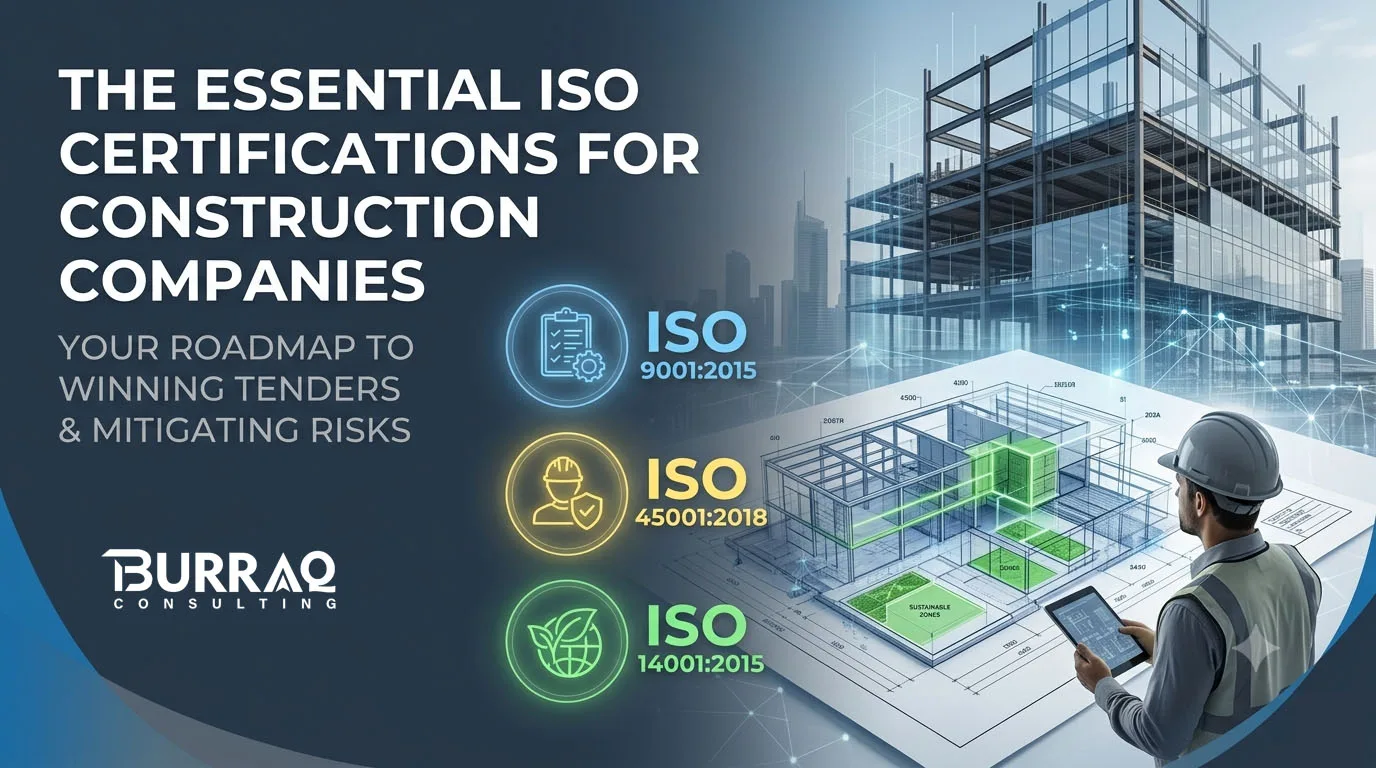
Implementing these three standards ensures that your firm addresses the pillars of commercial reliability: structural delivery, life safety, and regulatory compliance.
ISO 9001:2015 – Quality Management System (QMS)
This remains the most universally requested certification across worldwide engineering and construction tenders. ISO 9001 establishes a systematic framework that ensures your organization can consistently execute projects within scope, budget, and deadline parameters.
- Document Control: Streamlines structural revisions, shop drawings, and blueprint modifications across site teams and architects to eliminate miscommunication.
- Subcontractor Quality: Implements explicit evaluation criteria for third-party subcontractors and
- Rework Mitigation: Enforces systematic inspection protocols that catch structural deviations early, minimizing material waste and costly project delays.
ISO 45001:2018 – Occupational Health & Safety (OH&S) Management
Construction sites are high-hazard working environments. ISO 45001 shifts your corporate safety approach from reactive firefighting to proactive, systemic risk mitigation. It demonstrates to clients and regulatory authorities that workforce preservation is embedded in your corporate DNA.
- Hazard Identification: Standardizes Job Safety Analyses (JSAs) and risk profiling for high-altitude operations, heavy machinery execution, and deep structural excavations.
- Incident Reduction: Drastically cuts down on-site workplace injuries, reducing corporate liability, preventing regulatory stop-work orders, and lowering insurance premiums.
- Method Statements: Ensures site managers adhere strictly to safe operating procedures that are auditable, protecting workers and public stakeholders alike.
ISO 14001:2015 – Environmental Management System (EMS)
Modern building regulations, green infrastructure developments, and major corporate clients increasingly award contracts based on sustainability benchmarks. ISO 14001 is the international language of environmental responsibility.
- Site Impact Management: Provides concrete strategies to monitor and reduce air pollution, construction dust, vibration levels, and groundwater contamination.
- Waste Stream Optimization: Organizes legal disposal mechanisms, tracking hazardous building waste, concrete recycling, and debris management.
- Resource Conservation: Drives efficiency in water use and fuel consumption during massive mobilization
Core Standards Comparison
| ISO Standard | Core Structural Target | Primary Commercial Benefit |
|---|---|---|
| ISO 9001:2015 | Quality Management & Deliverables | Minimizes material reworks; accelerates PQQ approvals. |
| ISO 45001:2018 | Workforce Health & Site Safety | Protects labor asset; shields firm from regulatory stop-orders. |
| ISO 14001:2015 | Environmental Compliance | Meets green building criteria; secures public sector tenders. |
Next-Generation Standards: Digital & Cyber Demands
As the construction landscape undergoes rapid technological transformation, two emerging standards have moved from optional considerations to absolute necessities for premier firms:
- ISO 19650 (Building Information Modelling – BIM): Defines the optimal collaborative process for information management across the entire lifecycle of a built Highly required for major engineering works involving dense cloud-based design collaboration.
- ISO 27001 (Information Security Management System): Protects corporate intellectual property, sensitive digital architectural layouts, and client pricing data from cyber Essential as commercial supply chains integrate via cloud systems.
How Burraq Consulting Accelerates Your Certification Journey
Navigating structural audits, developing compliant documentation templates, and training multi-tiered workforces can prove overwhelming to attempt internally. At Burraq Consulting, we specialize in building practical, high-impact management frameworks specifically optimized for engineering, industrial, and construction enterprises.
We work hands-on with your leadership team to audit existing workflows, implement structural documentation benchmarks, and upskill site supervisors to ensure absolute compliance—translating standards into direct commercial leverage.