
Understanding ISO Certifications
ISO certifications are formal acknowledgments that an organization adheres to a set of predefined international standards established by the International Organization for Standardization (ISO). Founded in 1947, the ISO is a non-governmental organization that develops and publishes a wide range of global standards aimed at ensuring quality, safety, efficiency, and interoperability across various industries.
The purpose of ISO certifications is multifaceted; they aim to enhance organizational efficiency, improve product and service quality, increase customer satisfaction, and open doors to new markets. By meeting these internationally recognized benchmarks, companies demonstrate their commitment to excellence and operational excellence.
Obtaining ISO certification involves several structured steps. First, an organization must identify the relevant ISO standard applicable to its operations. This could range from ISO 9001, which pertains to quality management systems, to ISO 14001 for environmental management, among numerous others tailored for specific sectors. Organizations then implement necessary changes within their processes and conduct internal audits to ensure compliance with the chosen standard.
Once these preparatory measures are complete, a formal evaluation is carried out by an independent certifying body. This examination typically includes a thorough assessment of the organization’s management systems, practices, and processes, followed by the certification decision. Successfully passing this evaluation leads to the issuance of an ISO certificate, enabling the organization to signal its adherence to high standards.
The range of ISO standards is extensive, covering areas such as information security (ISO 27001), health and safety (ISO 45001), and food safety (ISO 22000), among others. Each standard serves as a comprehensive framework tailored for specific organizational needs, ensuring that businesses can operate effectively, uphold ethical practices, and meet regulatory requirements.
Enhancing Quality Assurance
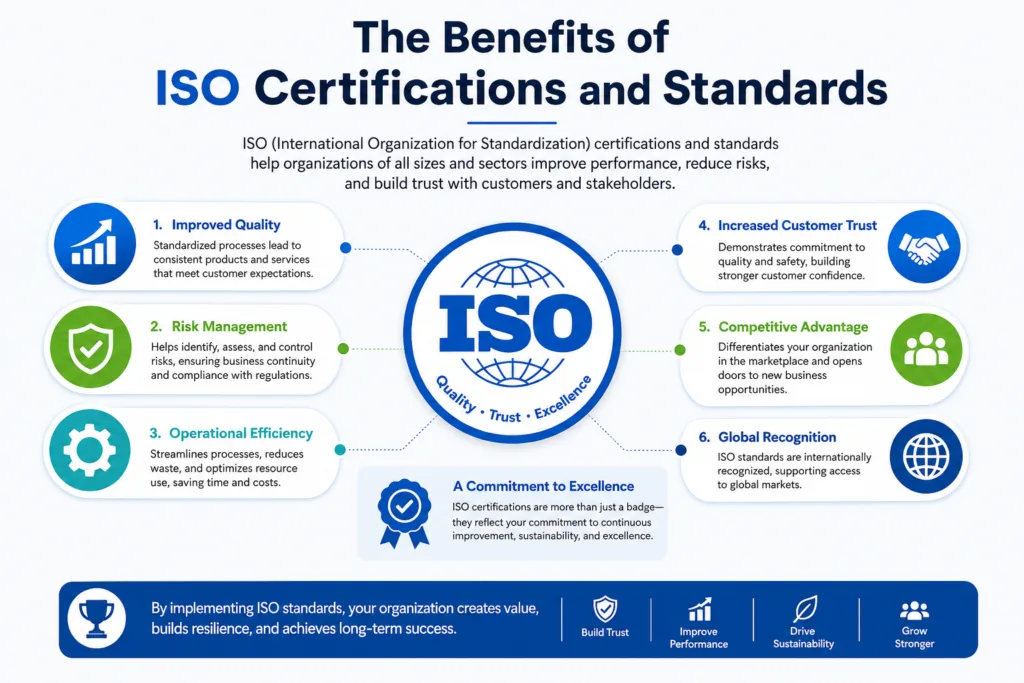
ISO certifications play a pivotal role in enhancing quality assurance within organizations by providing a structured framework for standardization and continuous improvement. These internationally recognized standards promote the establishment of consistent processes, which are crucial in maintaining the quality of products and services. By adopting ISO standards, organizations are better equipped to align their operational procedures with global best practices, thereby reducing variability and ensuring that quality is not only met but consistently upheld.
One of the significant advantages of implementing ISO quality management standards is their positive impact on customer satisfaction. When organizations commit to following standardized processes, they can deliver products and services that meet customer expectations reliably. This consistency fosters trust and loyalty among customers, as they recognize the organization’s dedication to maintaining high quality. Consequently, this can lead to repeat business and positive referrals, which are vital for long-term success.
Moreover, compliance with ISO standards can provide organizations with a competitive advantage in the marketplace. In a landscape where consumers are increasingly discerning about quality, organizations that prioritize ISO certifications often stand out. They signal to potential customers and business partners that they adhere to rigorous quality assurance practices, thereby enhancing their reputation and credibility. This perception not only attracts more clients but also positions the organization as a leader in its respective industry.
In conclusion, the integration of ISO certifications within organizational practices is instrumental in enhancing quality assurance. By standardizing processes, improving customer satisfaction, and providing a competitive edge, ISO certifications emerge as a vital element in the pursuit of operational excellence.
Boosting Efficiency and Reducing Costs
The implementation of ISO standards is widely recognized for its significant role in enhancing operational efficiency and reducing costs within organizations. By adopting these internationally accepted standards, organizations establish a framework that promotes consistency and quality across all operational processes. This standardization is crucial, as it creates a unified approach to operations, allowing for the optimization of resources. The efficient use of resources minimizes wastage, leading to substantial cost savings.
Moreover, the reduction of errors is an important aspect related to the adoption of ISO standards. These standards equip organizations with systematic procedures and guidelines that ensure each process is executed consistently and accurately. This not only enhances the overall quality of services and products but also minimizes the likelihood of errors. When errors are reduced, organizations can enjoy less rework and fewer complications, which directly contributes to lowering operational costs.
Additionally, incorporating ISO standards encourages a culture of continuous improvement within organizations. This focus on improvement leads to the identification of inefficiencies or bottlenecks within operational processes. By streamlining these processes, organizations can achieve faster turnaround times and improve productivity. The resulting operational streamlining facilitates a higher throughput, meaning organizations can do more with less, further enhancing the economic benefit.
The financial implications of implementing ISO certifications are considerable. Organizations often experience increased profitability through enhanced efficiency and reduced waste. This combination not only lessens operational costs but can also contribute to a stronger competitive position in the market. Overall, the move towards ISO certifications is shown to create a measurable impact on an organization’s bottom line, confirming their importance in driving efficiency and encouraging cost-effective practices.
Improving Credibility and Market Access
ISO certifications serve as a pivotal element in enhancing an organization’s credibility and trustworthiness among various stakeholders, including customers, business partners, and regulatory authorities. By obtaining ISO certifications, an organization visibly demonstrates its commitment to maintaining internationally recognized standards of quality, efficiency, and safety in its operations. This commitment builds trust with existing customers and attracts new ones, establishing a solid foundation for long-term business relationships.
Moreover, the benefits of ISO certification extend beyond mere credibility. Companies that achieve ISO standards are recognized for their adherence to established frameworks, which can significantly mitigate the risk of operational failures and ensure compliance with industry-specific regulations. Such compliance often proves advantageous, as regulatory bodies frequently favor businesses that possess ISO certifications, resulting in increased cooperation and reduced scrutiny.
In addition, ISO certifications facilitate market access, particularly in international arenas. Numerous countries and global markets prioritize transactions with certified organizations, as they are deemed more reputable and reliable. This access is particularly vital for companies attempting to reach new demographics and expand their global footprint. With ISO certification in hand, businesses can confidently participate in competitive bidding processes and collaborations that may have previously been out of reach.
Furthermore, achieving ISO certification can significantly enhance an organization’s reputation in its niche, giving it a competitive edge over rivals lacking similar certifications. This distinction not only attracts customers but also interests potential partners who are looking for reliable entities to collaborate with. Therefore, the path to ISO certification is not just a bureaucratic formality; rather, it is a strategic decision that ultimately fosters credibility, trust, and expansive market opportunities.
Choose Burraq Consulting for Your Company Certification
At Burraq Consulting, we make the certification process simple, fast, and hassle-free. With a team of experienced consultants and auditors, we help organizations achieve internationally recognized certifications with confidence. Our practical approach, industry expertise, and commitment to client success ensure smooth implementation, minimal disruption to operations, and timely certification. Whether you need ISO, safety, quality, environmental, or industry-specific certifications, we provide end-to-end support, expert guidance, and customized solutions tailored to your business needs. Partner with Burraq Consulting to strengthen credibility, improve performance, and gain a competitive advantage in your industry.